







Articles
South Africa is busy introducing digital ID’s. Many parents are concerned that this will infringe on the freedom to choose home education.
Creating a population register is however nothing new. We read about it in the Bible in the Book of Luke that Joseph and Mary had to go to Betlehem for this. This register was administered by the Roman state. The purpose of population register was mainly for the purposes of tax and military conscription. In some societies, population registers were also used to keep track of enslaved populations.
With the fall of the Roman empire, the maintenance of records of births, deaths and marriages was taken over by the Christian church from about the year 500. Since the 1700’s , Western states again took over the function of maintaining a population register.
A Digital ID is in effect a more accurate and efficient population register. It contains biometric data to verifies that you are who you say you are. This is not something new. The photo in your ID book is in essence also biometric data. Most South Africans have already provided biometric information through the existing ID system and through FICA-related banking processes.
There is a fear that such a system will make it easier for the state to identify parents that fail to register their children for home education. Digital ID’s however will make no significant difference to this. Schools already capture ID numbers of their learners. To identify children failing to attend school can easily be done by comparing the children enrolled in schools with the population register.
To avoid that the state tracks down children not attending school, parents might decide not to register the birth of their children. Then their children will not be in the population register and it will be very difficult to track them down if they do not attend school. The fine determined for failing to register the births of their children is insignificant and difficult to enforce.
In a nutshell. Digital ID’s will not give government more control over home education. However, it might motivate some parents not to register the births of their children.
Although there might be legitimate fears that a corrupt state might misuse a centralised identity database containing biometric data, this does not directly affect home education.
Legal & Research
Homeschooling and the law
Home schooling was recognized in 1996 in Section 51 of the SA Schools
+ ViewCentres
Support




Curriculums


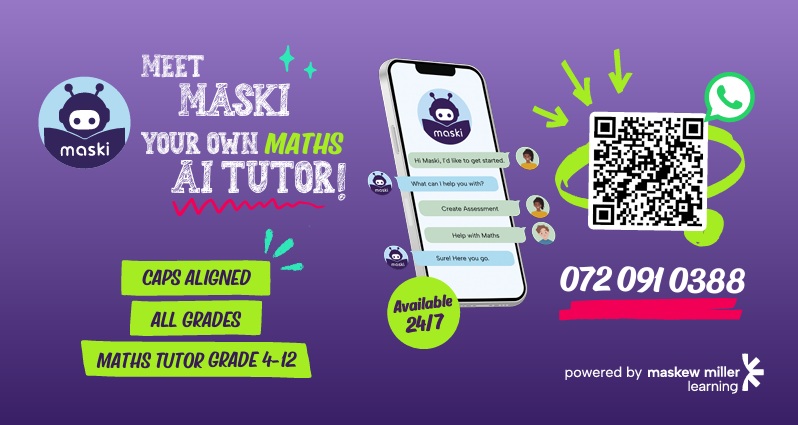
Maski AI Maths Tutor
Meet Maski® Your ultimate support guide to authentic, credible, ...


PASS Ged Academy
Pass GED® Academy is your online pathway to achieving your Grade 12 ...
Frequently Asked Questions
-
How does homeschooling work?
Homeschooling is different for every family as it depend on the parents educational goals for their children Education is the development of the...
-
Do home learners get homework?
In general all their schoolwork is homework and they do not get to do extra work in the afternoons. A tutor might give some extra work to complete...
-
Do I need to be a qualified teacher?
No. Research has found no correlation between the qualification of the parent and the academic performance of the child. Research shows that...
-
What is home education or homeschooling?
Home education is the oldest form of education. The school system as we know it is actually fairly new. It is done under the guidance and the...