South Africa's Education Crisis. Why the Problem is not a Lack of Schools
Are we trying to fix the wrong thing?
There is broad consensus that education in South Africa is in a state of crisis. Evidence often cited includes overcrowded classrooms, poor performance in international assessments, learners dropping out of the school system, and an overloaded curriculum.
Among experts there is also broad agreement about the proposed solution: the school system must be fixed. This school system compels parents to enrol their children in a school. Experts argue that compulsory schooling should start at an earlier age so that children can begin mastering so-called essential skills while they are still young. More classrooms must be built. The state-prescribed curriculum must be reformed so that the skills needed for the economy can be taught, without excessive administration.
Because of this broad consensus, there is little real debate about education. The only education debate that managed to draw about 10,000 people to the Voortrekker Monument was the debate over the powers of governing bodies of public schools to determine language and admissions policies, and thereby maintain identity, values, and standards. However, this debate has little to do with the education crisis itself. Could this lack of debate be the result of us talking about the wrong issue?
To answer this question, it is necessary to reason from first principles. The first step is to have a definition of education. In South Africa, basic education is regulated by the South African Schools Act. However, this Act contains no definition of education. For a definition one can turn to the Universal Declaration of Human Rights, according to which education should aim at “the full development of the human personality and the strengthening of respect for human rights and fundamental freedoms.”
Limitations of the Concept of Education
This definition alone already illustrates a core problem with the school system. If every person has a unique personality, how can a uniform, state-prescribed curriculum be suitable for developing the human personality? Can education promote respect for freedom if the law keeps children in school through compulsion?
Secondly, it is necessary to have a definition of the economy. According to the well-known economist Ludwig von Mises, economics is the study of human action. In economic activity, things are exchanged. Someone buys a cold drink, for example, because at that moment he has a stronger preference for the cold drink than for the money he must pay for it. Just as every personality is unique, every individual’s preferences are also unique. Businesses therefore try to provide products and services that align as closely as possible with the preferences of their market.
To satisfy these diverse preferences, a great diversity of knowledge and skills is required. How can a uniform curriculum, which by necessity only transfers a limited set of knowledge and skills, make sense for an economy that requires a wide variety of abilities? Even if one were to assume for a moment that a uniform curriculum could make sense for everyone, this leads to a further question: Who is qualified to determine such a curriculum? Is it really the state — which collects its income through coercion — that is best suited to decide how people should be educated to become innovative and productive citizens?
The law further determines that school attendance is compulsory for children of certain ages. The school is an environment where children are strictly divided into groups according to age and within those groups receive education according to a state-prescribed curriculum for that age group. Nowhere in real life are people so rigidly divided by age. In families and workplaces, people of different ages live and work together. Is this artificial school environment truly suitable for preparing children for real life?
A simple analysis of our education system from first principles suggests that the education crisis is not merely the result of a broken school system, but that the school system itself is the problem. The system developed centuries ago to prepare young people for factory work and military conscription, and is largely unsuitable for the requirements of a modern society. Fixing the school system will therefore not solve the education problem.
The overwhelming majority of experts in the field of education have a vested interest within the existing school system. For this reason, it is difficult for them to think outside the school paradigm. They will continue to argue for more schools, more research, and more reform within the same framework. But who will advocate for the abolition of compulsory schooling and the return of responsibility for education to parents?
The Hidden Blessing of Schooling Decline
Meanwhile, real reform in education is taking place invisibly, in family homes. Parents are deciding to remove their children from the school system, or not to send them there at all. Experts and ministers frown. How can people without formal teaching qualifications educate their children? Parents may not do so without permission from the department and must be monitored by the department. For this reason, the BELA Act requires permission and monitoring for education outside the school system.
Despite BELA, education outside the school system is growing relentlessly and largely invisibly. People hear about it only through friends and family, and occasionally through a sporadic media interview. Meanwhile, experts and ministers remain silent while they frantically try to fix a failing school system with shrinking budgets.
Perhaps the rapid decline of the school system in South Africa over the past decades is a hidden blessing. It serves as a catalyst for the growth of what may be the real solution to education, namely education outside the school system. As the efforts of experts and ministers to save the existing paradigm continue to fail, parents who are able to think outside this paradigm gradually take over.
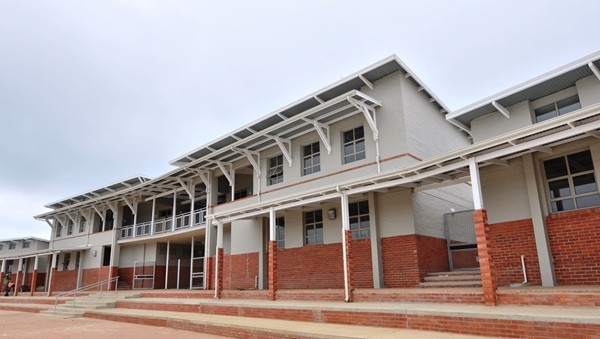
In time this will become increasingly visible — when education departments begin selling school buildings to balance their budgets. When school attendance officers become as rare as race classification officers after 1994.
About the author

Comments
Events
Has no connect to show!
Legal & Research
Homeschooling and the law
Home schooling was recognized in 1996 in Section 51 of the SA Schools
+ ViewCentres
Homeschool ABC
Videos

SAHomeschoolers.Org Youtube Channel
Support




Curriculums

SAHomeschoolers Consultations
SAHomeschooler offers personal consultation to get parents started ...



PASS Ged Academy
Pass GED® Academy is your online pathway to achieving your Grade 12 ...
Frequently Asked Questions
-
Do homeschoolers take holidays?
Yes, they take breaks. Some homeschool families follow the public school year calendar especially if they are involved in sport and music...
-
Where can I find homeschool support groups?
There are many support groups consisting of parents that do things together and help each other. These groups operate on Facebook, mailing lists and...
-
Do home learners get homework?
In general all their schoolwork is homework and they do not get to do extra work in the afternoons. A tutor might give some extra work to complete...
-
Is home education often used as a smoke screen to hide child neglect?
State interference in home education is often justified as something that can identify situations where home education is used as a smoke screen to...