Choosing a Homeschool Curriculum in South Africa. What actually matters?
Choosing a formal homeschool curriculum in South Africa is one of the biggest decisions you'll make as a home educating parent, and one of the most overwhelming. Between CAPS, Cambridge, IEB, Pearson Edexcel, and American diploma options, the landscape has expanded well beyond what most parents expect when they first start researching.
The temptation is to pick whatever looks most familiar, or whatever your neighbour chose. But curriculum choice isn't really about the curriculum itself. It's about where your child is heading, and what doors you want open when they get there.
Here's how to think about it clearly.
Start With the End, Not the Beginning
Most parents choose a curriculum based on what feels comfortable right now: the grade their child is in, the subjects they recognise, the system they grew up with. That's understandable, but it's backwards.
The more useful question is: where does your child need to be at 18? If they're likely to study at a South African university, your curriculum needs to lead to a qualification that South African institutions accept without complications. If there's any chance they'll apply internationally, you need a pathway that's recognised beyond our borders. If your family might relocate, portability becomes critical.
These aren't hypothetical questions. They determine which qualifications your child will hold at the end of their schooling, and qualifications are not interchangeable.
Understanding Your Main Options
CAPS (Curriculum and Assessment Policy Statement) is South Africa's national curriculum, leading to the National Senior Certificate. It's structured, term-based, and directly aligned with local university admission requirements. For families planning to stay in South Africa, CAPS offers the most straightforward path. It's also available in Afrikaans as KABV for families who prefer mother-tongue instruction.
The International British Curriculum is globally recognised and offers more flexibility in pacing. Students work toward IGCSEs and AS/A Levels, which are accepted by universities in over 160 countries. This route suits families who value international mobility or want a curriculum that encourages deeper subject specialisation earlier.
IEB (Independent Examinations Board) is another South African option, often considered more rigorous than standard CAPS. It's well-regarded by local universities and emphasises critical thinking and application over rote learning. IEB is gaining traction among homeschooling families who want a South African qualification with a stronger academic reputation.
The American K-12 Curriculum leads to a US High School Diploma through a credit-based system. It offers significant flexibility through elective choices and is particularly relevant for families with ties to the United States or students interested in pursuing NCAA-eligible athletics alongside their studies.
Pearson Edexcel offers an internationally accredited pathway that's particularly useful for science students who need practical assessment alternatives, for example, students without access to a physical laboratory.
The Questions That Actually Help You Decide
Once you understand the broad pathways, the decision becomes more personal. Ask yourself: Is my child likely to study locally or abroad? How important is pacing flexibility; does my child need to move faster in some subjects and slower in others? Does my child thrive with structured, term-based deadlines or with more self-directed learning? Are we likely to move countries in the next five years? Does my child have specific ambitions (like competitive sport or performing arts) that require schedule flexibility?
There is no single best curriculum. There is only the best curriculum for your child, given your family's circumstances. A student who wants to study medicine at UCT has different needs from one eyeing engineering at MIT. A family settled in Johannesburg faces different realities than one moving between Dubai and Cape Town.
Why Accreditation Should Be Non-Negotiable
Whichever curriculum you choose, make sure your provider is properly accredited. This isn't a nice-to-have; it's the difference between your child holding a qualification that universities and employers recognise, and one that creates friction at every next step.
For CAPS, look for SACAI or IEB registration. For British and Pearson pathways, Pearson Edexcel accreditation matters. For US curricula, Cognia accreditation ensures global recognition. If a provider can't clearly show you their accreditation credentials, that's a red flag. Providers like CambriLearn, for instance, hold Cognia accreditation, Pearson Edexcel accreditation, and are both SACAI and IEB registered, which means families can choose between South African, British, and American pathways under one provider, with the accreditation to back each one up.
You Can Change Course, But It's Easier Early
One thing that reassures many parents: curriculum choice isn't always permanent. Switching between pathways is possible, particularly in primary school and early high school. A child can start with CAPS and transition to the British curriculum, or begin with Cambridge and move to IEB.
However, the later you switch, the harder it gets. By Grade 10, students are locked into specific examination structures with distinct assessment styles, content expectations, and timelines. Moving from CAPS to Cambridge in Grade 11, for example, would mean adapting to a fundamentally different examination approach under time pressure.
If you're uncertain, start with the pathway that keeps the most doors open for your family. You can always narrow later. It's much harder to widen your options once you've committed.
Take Your Time, But Take It Seriously
Choosing a homeschool curriculum in South Africa deserves more thought than most parents initially give it. The system you choose shapes not just what your child learns, but what qualifications they hold, which institutions welcome them, and how smoothly they transition into their next chapter.
Talk to other homeschooling families. Research providers thoroughly. Ask hard questions about accreditation, examination logistics, and university recognition. And above all, think about your child: not just the child they are today, but the young adult they're becoming.
The right curriculum won't just educate them. It will position them.

About the author

Comments
Events
Has no connect to show!
Legal & Research
Homeschooling and the law
Home schooling was recognized in 1996 in Section 51 of the SA Schools
+ ViewCentres
Homeschool ABC
Videos

SAHomeschoolers.Org Youtube Channel
Support




Curriculums

Homeschool South Africa ...
Are you feeling overwhelmed in your homeschool journey? Homeschool ...

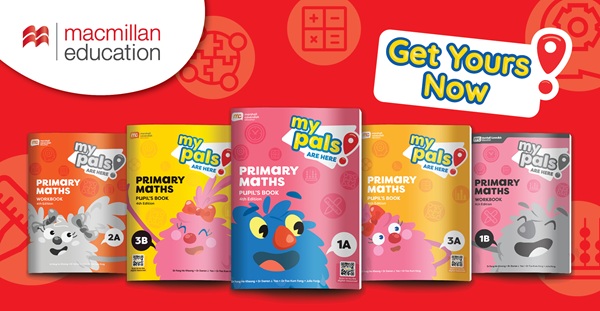
My Pals are Here! Primary Maths
My Pal are Here! Primary Maths Homeschooling parents, are ...


Frequently Asked Questions
-
Do homeschoolers take holidays?
Yes, they take breaks. Some homeschool families follow the public school year calendar especially if they are involved in sport and music...
-
Do home learners get homework?
In general all their schoolwork is homework and they do not get to do extra work in the afternoons. A tutor might give some extra work to complete...
-
What is home education or homeschooling?
Home education is the oldest form of education. The school system as we know it is actually fairly new. It is done under the guidance and the...
-
Do I need to be a qualified teacher?
No. Research has found no correlation between the qualification of the parent and the academic performance of the child. Research shows that...